AR Image Target Use Cases: Who Uses Them, and What For
Wine labels, museums, textbooks and packaging: where AR image tracking is deployed, what the published numbers show, and which figures fail a check.
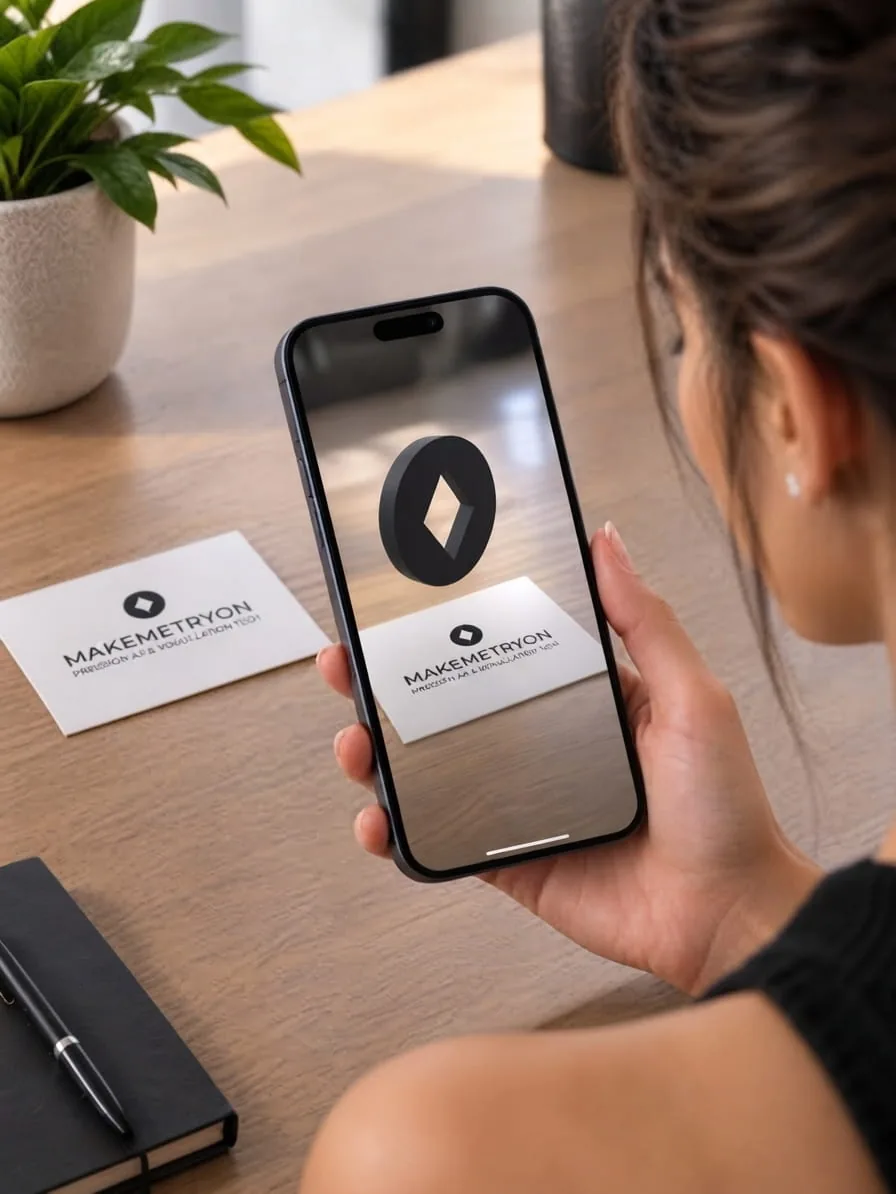
Image tracking is not new or experimental. It has been shipping in production since the early 2010s, and the question worth asking is no longer does it work — it does — but where does it earn its keep, and what happens when someone actually measures the result.
We went looking for the deployments that published numbers. Some are genuinely impressive. Several of the figures that circulate in vendor decks turn out to be softer than they look, and it is worth knowing which is which before you take one into a budget meeting.
What do image targets do that other AR cannot?
Worth being precise about the mechanism first, because it explains the shape of every use case below.
Surface tracking — the kind that drops a sofa on your floor — finds a plane. It has no idea what that plane is. An image target is the opposite: the tracker is trained on specific artwork, so when it locks on it knows which image is in view and where it sits in space, frame by frame.
Two consequences follow, and both matter commercially:
- The content can be specific to the object. Not "a wine bottle" — this wine, this vintage, this SKU. Print a hundred labels and each one can open a different experience.
- The content is registered to the print. The model stands on the artwork and stays there as the phone moves, rather than floating loosely nearby.
That combination is what a QR code cannot do. A QR code is a doorway; it fires once and then stops being involved. Most real deployments use both — a link or code to open the browser, an image target to do the tracking once it is open.
How do wine and spirits labels use AR?
If you have heard of exactly one AR packaging campaign, it is 19 Crimes, the Treasury Wine Estates brand whose Living Wine Labels app made the convicts on the label talk when you pointed a phone at the bottle.
The label is the image target. Portrait engravings are dense with tonal detail, which is close to ideal tracking material — the same properties that make a good target for WebAR image tracking.
5.5M
Living Wine Labels app downloads
22.1M
AR experiences viewed
4M → 18M
Bottles sold, reported over 18 months
2017
Market Watch Wine Brand of the Year
The engagement figures — downloads and experience views — come from the brand and its technology partners, and they are the useful ones. They tell you something real: 22 million scans is people voluntarily picking up a phone and pointing it at a bottle, at a scale that puts the behaviour beyond doubt.
The same shape shows up elsewhere in spirits. Jack Daniel's built an AR experience that turned the bottle label into a pop-up book of the distillery; the figures reported for its first month were around 30,000 users viewing 110,000 experiences, with average session times over five minutes. Vendor-reported again — but a five-minute average session on a whiskey bottle is a number worth sitting with, given what a brand normally pays for five minutes of attention.
What does the research say about AR packaging?
Here is where the evidence gets thinner and more honest at the same time.
The most rigorous recent work is a 2025 exploratory study in Behavioral Sciences (Accardi, Campo, Bilucaglia, Zito, Caccamo & Russo). It put AR on cheese packaging labels and compared a static overlay against an immersive 360° experience, measuring 20 participants with 7-channel EEG, heart rate and skin conductance alongside self-report.
| Measure | Static AR | Immersive AR | Significance |
|---|---|---|---|
| Emotional engagement (EI) | 0.30 | 0.50 | p = 0.025 |
| Cognitive engagement (BATR) | — | higher | p = 0.069, not significant |
| Perceived immersion (total) | 28.35 | 33.00 | p = 0.020 |
| Purchase intention | — | — | no difference |
| Brand and product authenticity | — | — | no difference |
Two findings, and the second is the one vendors leave out.
Depth of the experience matters. A flat text overlay and a genuinely immersive scene are not the same product. The immersive version measurably moved emotional engagement and how immersed people felt, and it did so on physiological measures rather than only a questionnaire.
It did not move stated purchase intent. On a single first exposure, with 20 people, the study found no significant difference in whether participants said they would buy. That is a small sample and an exploratory design, so it does not prove absence — but it is the closest thing to a controlled test in the packaging literature, and it declines to give you a conversion number.
If that pattern sounds familiar, it is the one we traced through the try-on category in what the virtual try-on statistics actually say: solid evidence for engagement and confidence, thin evidence for a specific sales multiplier.
How do museums and galleries use image tracking?
Cultural venues have been using image recognition on wall labels and artworks for years, and — unusually — they publish.
- Cuseum surveyed 103 visitors to an AR-enabled museum experience: 91% called it an exciting new way to access information, and 87% said it enhanced their visit and that they wished all museums had it.
- At the Art Gallery of Ontario, 84% of visitors to an AR exhibition reported feeling engaged with the art, and 39% went back and looked at the works again after using the app.
That last figure is the interesting one for anyone outside museums too. Looking again is the behaviour AR is genuinely good at producing — and it is the behaviour a packaging or catalog team is usually buying, whether or not they describe it that way.
Recognition accuracy in this setting is no longer the constraint: a 2025 study of an AR exhibit app at the Abylkhan Kasteyev State Museum of Arts reported above 97% recognition accuracy across its artwork set. Paintings make excellent targets for the same reason engraved wine labels do.
Education and publishing
Education has the deepest research base of any AR application area, because academics study their own classrooms.
A second-order meta-analysis spanning three decades of AR-in-education studies puts the effect on learning outcomes at g = 0.64 (95% CI 0.56–0.72), a solid medium effect. A separate meta-analysis of learning gains reports d = 0.71. In higher education specifically, pooled effects run larger still.
The practical publishing use case is straightforward. A textbook diagram, a museum guidebook page, or a training manual becomes the target, and the 3D model a flat page cannot show — a molecule, an engine assembly, an anatomical structure — stands up off the paper.
Where else it ships
The remaining categories have less published data but very consistent patterns.
| Use case | The image target | What appears | Why an image target |
|---|---|---|---|
| FMCG packaging | Front-of-pack artwork | Provenance, recipes, brand story | Per-SKU content from one print run |
| Trading cards and collectibles | Card face | The character or model, animated | Every card is a different target |
| Real estate | Printed floor plan or brochure | 3D massing model of the building | Model registered to the plan |
| Events and trade shows | Badge, booth graphic, poster | Product demo, agenda, wayfinding | Nothing to install on a busy floor |
| Direct mail and catalogs | Cover or a specific page | Product in 3D, video message | Turns flat print into a measurable channel |
| Business cards | Card front | Portfolio, showreel, 3D logo | Small, dense, always carried |
| Wine, spirits and luxury | Label | Story, authenticity, provenance | The label is already the brand asset |
You will find impressive response-rate figures quoted for the direct-mail row in particular — uplifts from low single digits to 30% and above. We could not trace those to a primary source, and they appear to circulate between vendor blogs citing each other. We would not put them in a business case.
Why does no app matter so much?
Almost every headline campaign above shipped a dedicated app, and that is why their download counts get quoted. It is also the reason most of them ended.
The funnel was: see the bottle, understand there is AR, find the app store, download 80 MB, open it, point at the label. Every step lost people, and the app had to be maintained across OS releases long after the campaign ended. The 5.5 million downloads 19 Crimes reported are remarkable precisely because that funnel is so hostile.
Browser-based image tracking removes the entire middle. The link opens, the camera view starts, the target is recognised. There are widely quoted figures claiming an app-install requirement costs 60–80% of potential users — those are vendor estimates rather than published research, so we would not lean on the exact number. The structural point stands without it: every step you delete before the camera opens is a step nobody can drop out of.
It also changes what a target is worth after launch. When the artwork is the anchor and the model is a dashboard setting, you can swap the 3D content behind a printed target without reprinting anything — so a package already on a shelf can show a different experience next quarter.
What makes an AR use case work?
Across every deployment above, the ones that produced numbers share three conditions. If your idea is missing one, the AR is usually decoration.
Something physical is already in front of someone
Image tracking has no discovery mechanism of its own. It works when the object is already there — on a shelf, in a mailbox, on a gallery wall. It cannot create that moment, only use it.
There is something print genuinely cannot carry
A 3D object, a process in motion, a person speaking, an interior you can look around. If the content would have worked as a photo on the pack, the scan was a detour, and people notice.
There is a reason to look a second time
The Art Gallery of Ontario's 39% who went back to the artwork is the metric to design for. Content that changes, rewards attention, or differs per SKU sustains the behaviour. A single-play video does not.
Where we would start
If you are testing this for the first time, do not commission a campaign. Take a print file you already own — a label, a cover, a catalog spread — upload it as a target, attach a model, and point a phone at a proof. That takes minutes, and it answers the two questions that actually gate the project: does this artwork track reliably, and is there anything worth showing on it.
The WebAR image tracking page runs the whole flow in the browser, and the documentation covers embedding it on your own page.
Then measure your own scans. Like every other number in this category, the only one that will convince anyone is the one that came from your own product.
Want to test an image target on your own packaging or print? Makemetryon’s WebAR image tracking runs in the phone browser with no app, and you can update the 3D content without reprinting. Try it free with the demo target.
Frequently asked questions
What is an AR image target used for?
An image target turns a specific printed surface — a label, a page, a poster, a wall panel — into an anchor for 3D content. Because the tracker recognises which image it is looking at, the experience can be specific to that exact product or exhibit, and the content sits registered on the artwork rather than floating near it.
Which industries use AR image targets most?
Wine and spirits labels, FMCG packaging, museums and galleries, publishing and education, event and trade-show collateral, and real estate. The common factor is not the industry but the situation — a printed object is already in front of someone, and there is something worth showing that the print itself cannot carry.
Is there real evidence that AR on packaging works?
There is a mix. The strongest published work is small: a 2025 neuromarketing study in Behavioral Sciences measured 20 participants with EEG and found immersive AR on cheese labels produced significantly higher emotional engagement and perceived immersion than static AR, but no significant difference in stated purchase intention. Most of the large commercial numbers quoted in the category are brand or vendor figures reported without a control group.
Why use an image target instead of a QR code?
A QR code sends the phone to a URL and then stops being involved. An image target keeps working after the launch: it tells the renderer where the artwork is in space, frame by frame, so a model can stand on the label and stay there as the phone moves. In practice the two are complementary — a code or short link opens the browser, and the image target does the tracking.
Do customers need to install an app?
Not any more. The early flagship campaigns shipped dedicated apps, which is why their download counts are quoted so often. Browser-based image tracking runs from a link, so the experience opens in the phone camera view with nothing to install, which removes the largest drop-off point in the old funnel.