Selling Glasses Online: The Three Questions Every Shopper Asks
Do these suit me, will they fit, how do they look on me? How online eyewear stores can answer the three questions every shopper asks before buying glasses.
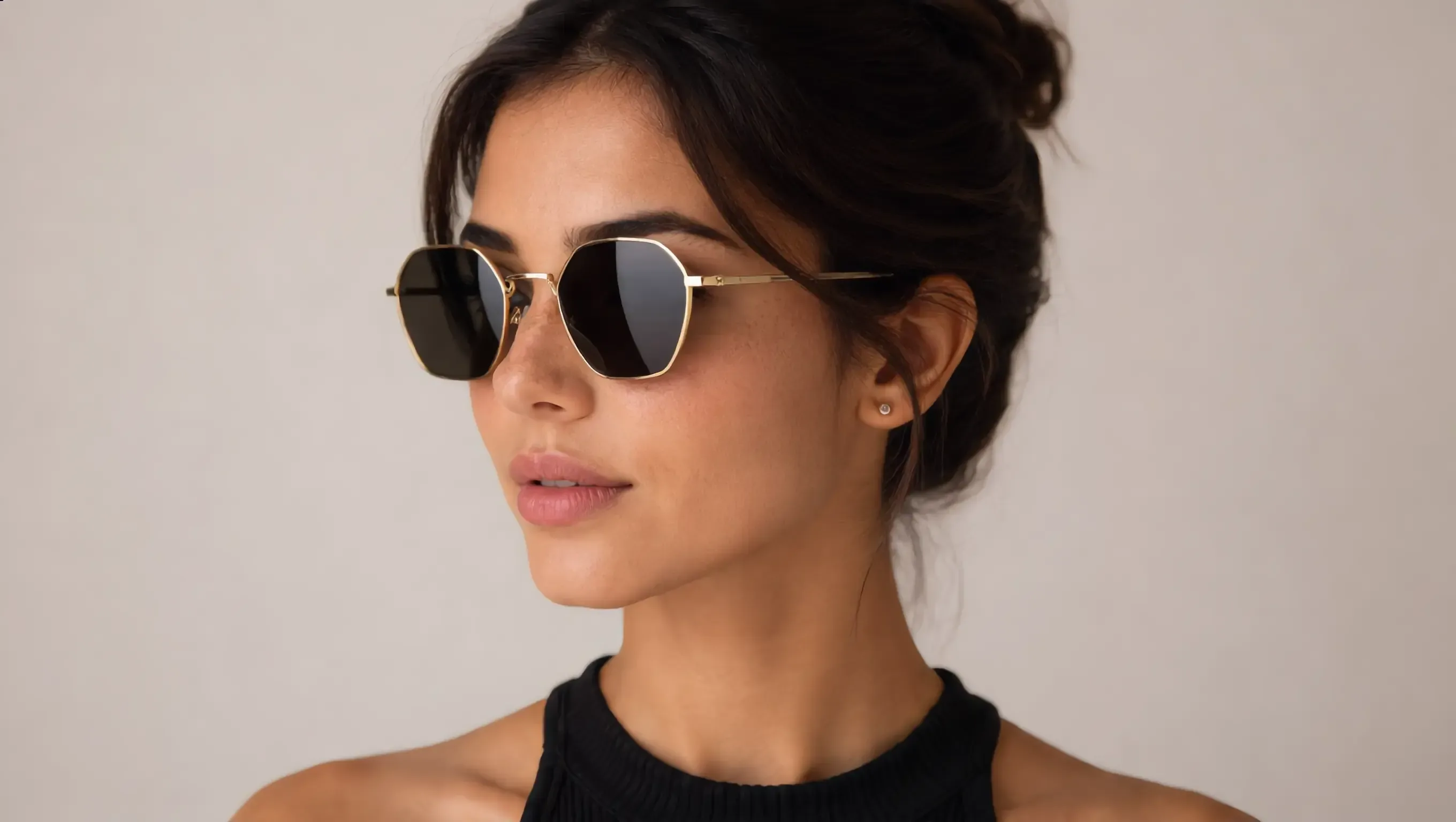
Selling glasses online means answering three questions that a shop assistant answers without thinking: do these suit me, will they fit, and how do they look on me? Online eyewear has an unusual problem. The product is medical, personal and worn on the most scrutinized part of the body, and for years the buying experience was a grid of frames on white backgrounds and a hope for the best. Here is what each question needs from your store.
Shoppers hesitate for reasons that are entirely rational. Watch how people actually behave on an eyewear product page and the hesitation resolves into three distinct questions, asked in a consistent order. Stores that answer all three convert. Stores that answer one or two lose people at whichever question they left open.
Do these frames suit me?
This is the first question and the one most stores skip entirely.
A shopper landing on a category page with hundreds of frames has no basis for narrowing them down. In a shop, an assistant does this within seconds: they look at the customer, register the proportions of their face, and hand over three or four frames worth trying. That single act removes most of the difficulty of buying glasses.
Face shape analysis is the online equivalent. It measures facial proportions — length against width, jaw against forehead, where the cheekbones sit — and maps them to the shapes that balance them. The underlying rule is contrast: angular frames bring definition to a round face, curved frames soften a square one. Face shape analysis in retail covers the four categories and what each one calls for.
The output should be wired into filtering, not just displayed. A shopper told "you have a square face" has learned a fact. A shopper shown forty frames that suit a square face has been sold to.
Will the glasses actually fit?
Fit splits into two parts, and only one of them can be solved online.
Optical fit is the lens geometry, and it is non-negotiable. The lab needs your interpupillary distance to place the optical centre of each lens in front of each pupil. Get it wrong and the lens acts partly as a prism, producing eye strain and headaches that get worse as prescription strength increases. Most prescriptions do not include PD, which leaves the shopper stuck at exactly the wrong moment — the checkout form.
Webcam measurement removes that dead end. How to measure pupillary distance at home compares the methods and their real accuracy.
Physical fit — bridge pressure, temple length, whether the frame slides down your nose — cannot be fully determined from a screen. Frame width against face width can be approximated, and publishing frame dimensions helps, but honest stores treat this as the part that a return policy exists to cover.
How do they look on me?
This is the question everyone knows about, and the one virtual try-on answers.
Modern AR try-on is not an image overlay. A dense face mesh tracks the face continuously, the frame is rendered as a 3D object positioned against it, and the result holds up as the shopper turns their head — which is exactly how people evaluate glasses in a mirror. They don't look straight ahead; they turn sideways and check the profile.
Try-on is also what makes comparison possible. The real decision is rarely these or nothing, it is these or those two, and switching between three frames on your own face is the moment the choice resolves.
Why the three belong together
They are usually sold separately, which is how stores end up with three vendors, three integrations, and three different camera permission prompts for one shopper.
| Question | What answers it | What it produces |
|---|---|---|
| Do these suit me? | Face shape analysis | A shortlist worth browsing |
| Will they fit? | IPD measurement | The number the lab needs |
| How do they look? | Virtual try-on | The confidence to order |
Each one also makes the next more useful. Face shape narrows the catalogue, so try-on is spent on frames that were plausible to begin with. IPD is captured in the same camera session the shopper already agreed to, instead of being asked for cold at checkout.
Sequenced properly, the flow mirrors what a good optical assistant does: look at the customer, suggest a few frames, let them try them, take the measurements. The eyewear widget runs all three from one embed and one camera prompt, and the documentation covers wiring the results into your own product filters.
Practical notes for eyewear store owners
Ask for the camera once. Three separate permission prompts is three chances to say no.
Put the tools on the product page. The doubt happens while comparing frames, not on a dedicated landing page the shopper never visits.
Say where the processing happens. On-device analysis is a genuine differentiator for a feature that points a camera at someone's face. State it next to the button, not in a policy page.
Do not gate any of it behind an account. The purpose is removing friction before the decision. An email wall placed in front of that defeats the entire mechanism.
Which tools answer each question?
- Do these suit me? Face shape detection narrows the frame catalog to shapes that suit the shopper.
- Will they fit? IPD measurement online gives a webcam IPD accurate to ±0.5 mm, plus face width, eye width and nose bridge.
- How do they look on me? Eyewear virtual try-on shows true-to-scale frames on the shopper’s face.
All three run from one embed on any website, and you can try each one free.
Frequently asked questions
What do I need to know before buying glasses online?
Three things: which frame shapes suit your face, your pupillary distance so the lenses are centred correctly, and how a specific frame actually looks on you. The first narrows the catalogue, the second is required by the lab, and the third is what gives you the confidence to order.
Can I buy glasses online without going to an optician?
You still need a current prescription from an eye examination — that part cannot be replaced. What can be done at home is everything after it: choosing a shape that suits you, measuring your pupillary distance, and previewing frames on your own face.
Why do online glasses stores ask for pupillary distance?
It tells the lab where to place the optical centre of each lens. If the centre does not line up with your pupil, the lens behaves partly like a prism, which causes eye strain and headaches. The higher your prescription, the less error is tolerable.
Is virtual try-on accurate enough to decide from?
For appearance, yes — modern AR maps frames to a dense face mesh so scale and position are realistic rather than a flat overlay. It answers how a frame looks on your face. It does not replace the physical comfort questions like nose bridge pressure or temple length, which only wearing them settles.